Quick verdict
Choose Iternal for government, defense, and enterprise teams that need AI running fully on their own infrastructure; choose Tendium for European teams selling to the public sector who need tender discovery plus bid help. Tendium lists a starting price of €125/mo, while Iternal is quote-only. In our capability model Iternal leads on DDQs, security questionnaires, answer library and source attribution, while Tendium leads on approval workflows and self-serve setup.
Both profiles reviewed Oct 2026
2 of 70 profiles, one scoring modelNo paid placementSources checked: 9Choose Iternal or Tendium
IT Choose Iternal when
- Government, defense, and enterprise teams that need AI running fully on their own infrastructure.
- You need stronger DDQs, security questionnaires and answer library than Tendium offers.
TE Choose Tendium when
- European teams selling to the public sector who need tender discovery plus bid help.
- You need stronger approval workflows and self-serve setup than Iternal offers.
- You want a listed starting price: €125/mo.
Side-by-side comparison
| Capability | Iternal | Tendium | Edge |
|---|---|---|---|
| Best for | Government, defense, and enterprise teams that need AI running fully on their own infrastructure. | European teams selling to the public sector who need tender discovery plus bid help. | - |
| Starting price | Custom | €125/mo | Tendium |
| Free tier | No | No | Match |
| RFPs | 2/3 | 2/3 | Match |
| DDQs | 1/3 | 0/3 | Iternal |
| Security questionnaires | 1/3 | 0/3 | Iternal |
| AI drafting | 2/3 | 2/3 | Match |
| Answer library | 2/3 | 1/3 | Iternal |
| Source attribution | 2/3 | 1/3 | Iternal |
| Workflow & approvals | 1/3 | 2/3 | Tendium |
| Integrations | 1/3 | 1/3 | Match |
| Self-serve onboarding | 1/3 | 2/3 | Tendium |
| ISO 27001 | Not listed | Not listed | - |
| SOC 2 | Not listed | Not listed | - |
| US hosting | Not listed | Not listed | - |
| EU hosting | Not listed | Not listed | - |
| Slack | Not listed | Not listed | - |
| Microsoft Teams | Not listed | Not listed | - |
| AWS, Azure, GCP | Not listed | Not listed | - |
| Listed integrations | Intel, Dell, NVIDIA | None listed | - |
| Certifications | SCIF-approved security | None listed | - |
What they look like
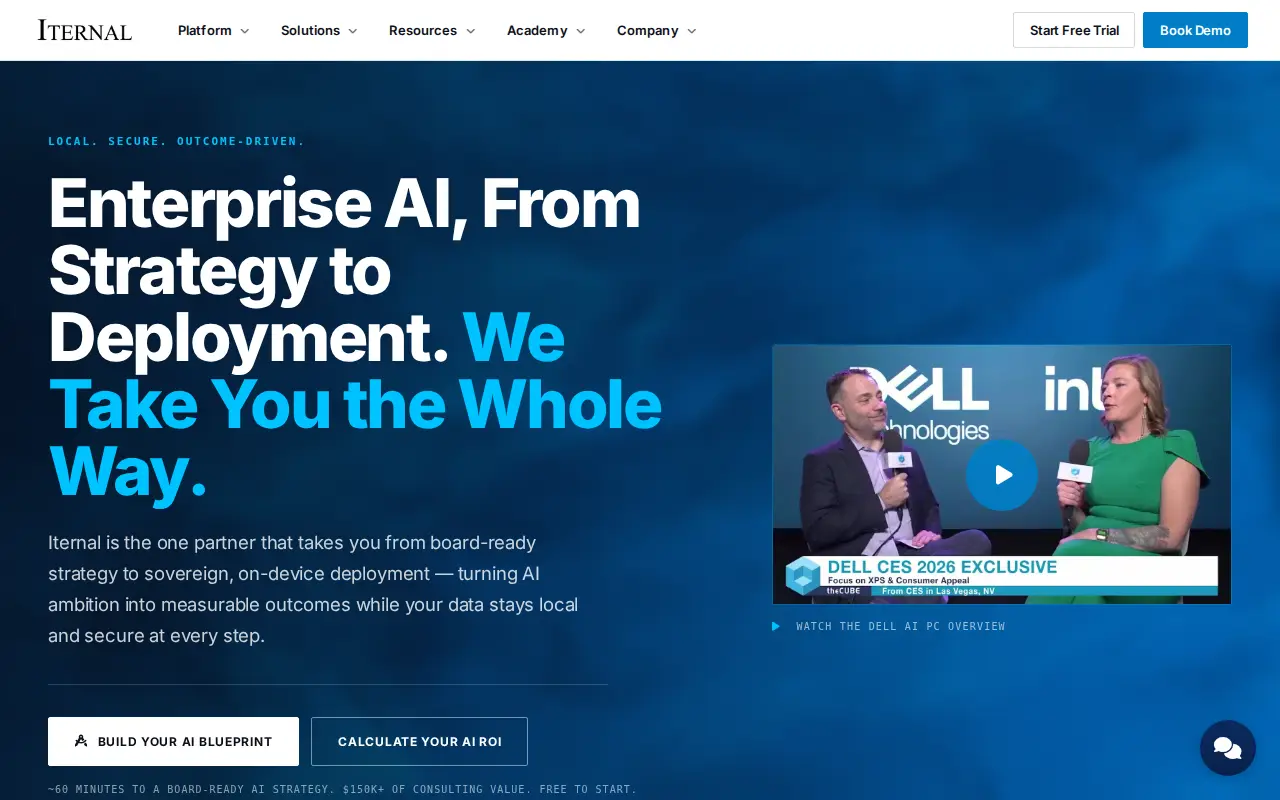
IT Iternal
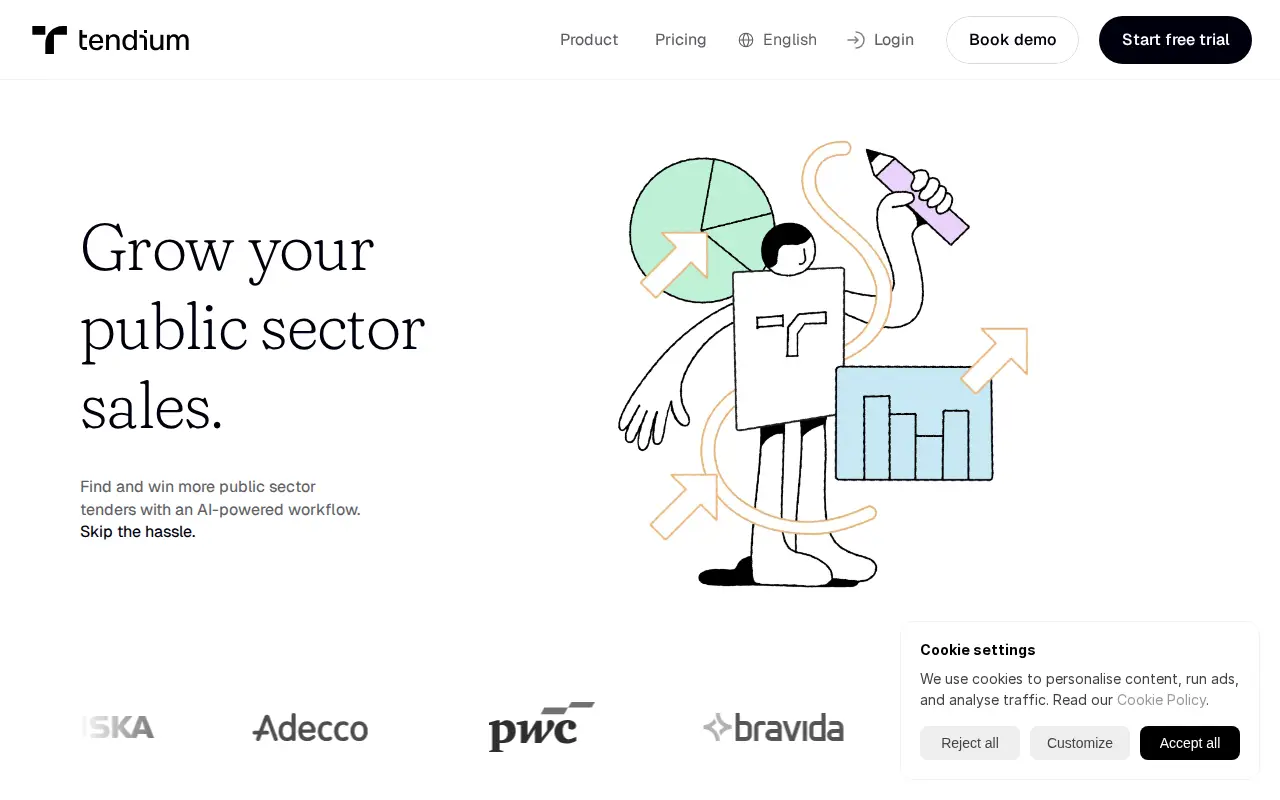
TE Tendium
Security: ISO 27001, SOC 2, and regional hosting
Put Iternal and Tendium through the same three questions a security reviewer will ask: ISO 27001, SOC 2, and whether you can keep the tenancy in the US or the EU. Cells say Not listed when we could not find the claim on a public vendor page.
| Check | Iternal | Tendium |
|---|---|---|
| ISO 27001 | Not listed | Not listed |
| SOC 2 | Not listed | Not listed |
| US hosting | Not listed | Not listed |
| EU hosting | Not listed | Not listed |
Slack and Microsoft Teams
During a live questionnaire, SMEs get pinged in Slack or Teams, not in a vendor portal. Here is what Iternal and Tendium publish for those two connections.
| Connection | Iternal | Tendium |
|---|---|---|
| Slack | Not listed | Not listed |
| Microsoft Teams | Not listed | Not listed |
Subprocessors: the big three clouds, then the niche names
Compare Iternal and Tendium on AWS, Azure and GCP first. Then scan for niche processors a reviewer should pause on: third-party LLMs, session replay, or support that leaves the region you elected.
| Layer | Iternal | Tendium |
|---|---|---|
| AWS, Azure, GCP | Not listed | Not listed |
| Watch-outs | No niche processors flagged in our sourced list. | No niche processors flagged in our sourced list. |
Pull out a map before you pull out a feature list. Iternal and Tendium both sell the same promise to public-sector sellers: find the tenders worth bidding on, decide quickly, and get a draft written. They just do it on different continents. Iternal’s Waypoint agent watches US federal and grant sources. Tendium watches European public procurement, with its deepest coverage in Sweden, Norway and Finland.
If you sell to agencies in Washington, Tendium’s tender feed is of little use to you. If you sell to Swedish municipalities, Waypoint’s will not help. The interesting comparison is for the companies that sell to both, and for buyers deciding whether discovery or deployment matters more. We read both vendors’ product, pricing and security pages in October 2026 to put this together.
Key takeaways
- Geography decides discovery: Waypoint monitors more than 10 US public-sector sources, including SAM.gov, Grants.gov, SBIR/STTR, NIH/NSF and USAspending. Tendium monitors tenders across European markets, and lists keyword search inside tender documents as available in Sweden, Norway and Finland.
- Deployment decides security: Iternal runs on your own infrastructure, including air-gapped networks, and lists SCIF-approved security, ITAR and CMMC 2.0 on its trust page. Tendium is a hosted web application with unlimited users on every plan.
- Price transparency: Tendium publishes an entry price, the Light plan from €125/mo, but that plan is tender monitoring only. Bid writing starts on Core, which is quote-based. Waypoint has no published price; buying starts with a 30-minute scoping call and a pilot.
- Writing the bid: Both draft from your own approved material. Tendium’s Writing Assistant works from a Content Library inside its BidFlow workflow; Waypoint assembles a Word draft from content structured by Iternal’s Blockify engine.
- Questionnaires: Neither is built for DDQs or security questionnaires. Both are tender tools first.
- Limitations: Tendium’s automatic form filling for Word and Excel and its SharePoint connector are both marked coming soon. Iternal concedes that proposal drafting ranks among the hardest jobs for a model running on local hardware.
Start with the map
Tendium is a Stockholm company, founded in 2018, and its product is shaped by Nordic procurement. The Find page says you can monitor public-sector tenders “in all European markets relevant for you,” search with English keywords regardless of tender language, and get an AI executive summary of each tender. The richer features carry a footnote: keyword search inside tender documents, and reading documents, updates and awards in the platform, are “available in Sweden, Norway and Finland.” The Intelligence add-on (expiring contracts, previous tenders, payment data, buyer and supplier insights) has the same three-country scope on the pricing page.
Iternal is an Austin company, also founded in 2018, and its RFP product is pointed squarely at the US. The Waypoint page describes collection from official government APIs, bulk extracts and curated feeds, then deduplication, relevance scoring, deadline tagging and a bid/no-bid qualification step.
So the honest first filter is simple:
- Mostly Nordic public-sector buyers: Tendium is built for you, and Waypoint’s discovery layer is irrelevant.
- Mostly US federal, grant or research funding: Waypoint’s discovery is built for you, and Tendium’s is not.
- Elsewhere in Europe: Tendium still monitors your markets, but some of its document-level features are listed for three countries only. Ask for a filter calibration on your own sector during the trial.
- Both sides of the Atlantic: You are probably looking at two tools, or at a discovery service plus a separate response platform.
Two pipelines, stage by stage
Both vendors describe a pipeline rather than a single feature. Here is how the stages line up, based on each vendor’s own description.
| Stage | Iternal Waypoint | Tendium |
|---|---|---|
| Find | US public-sector sources scanned on a schedule | European tender monitoring with email alerts and relevancy sorting |
| Understand | Relevance scoring and deadline tagging | AI executive summary of the tender documents |
| Qualify | Agentic bid/no-bid qualification | Smart Checklists for the bid/no-bid decision |
| Write | Grounded Word draft assembled via Blockify | Writing Assistant drafting from your Content Library |
| Review | One human proof gate before submission | Kanban overview, tasks and comments in BidFlow |
The shapes are close. The differences are in who runs the machinery and how far each stage is proven.
Iternal is unusually explicit about the second point. The Waypoint page says the collection and curation layers are the foundation running today, while bid/no-bid qualification and grounded Word draft assembly are the platform’s agentic layers that you switch on when your team is ready. Its headline figures (about 98% out-of-box accuracy, 10 to 15 minute drafts) are labelled “vendor-observed” and “not contractual commitments.” Credit to Iternal for the labels; read them as a reason to pilot.
Tendium is less explicit about maturity, but its BidFlow page clearly marks what is not here yet: “Coming soon: SharePoint integration” and “Coming soon: Form Filler,” the feature that would fill Word and Excel tender forms automatically for you to review.
Writing the bid itself
On the drafting job, both tools take the safe route: draft from content you have already approved.
Tendium’s BidFlow gives each bid a project with to-dos, and its Writing Assistant generates responses “based on your content library.” Louie, Tendium’s AI assistant, appears across the workflow, from finding tenders to drafting. For a Nordic bid team, a tool shaped around local procurement habits is a genuine advantage. The trade-off is that the form-filling feature most bid teams want for the dull parts of a tender (supplier declarations, price schedules, compliance grids in Excel) is still on the coming-soon list.
Iternal’s approach starts earlier, with the data. Blockify breaks your past proposals and technical documents into structured “IdeaBlocks,” and Waypoint drafts against those blocks into a Word document. Iternal says each answer traces back to a source block. It is also frank about the limits. Its proposals page warns that the generated response should never be sent as-is: it gets the author “most of the way there,” and a human still reads every word. The same page ranks proposal work, alongside legal work, as a weak spot for locally run models, and notes that slide decks and advanced PDF output cannot run locally.
Translation: on Iternal, the cost of keeping everything inside your network is a heavier edit pass. On Tendium, the cost of a hosted, easy-to-adopt tool is that your data lives with the vendor and some automation is still arriving.
Deployment, data and who can say yes
This is where the buyer profile splits hardest.
Iternal is built for the security officer who says “no.” Its products run on customer infrastructure, including air-gapped environments, and its trust page lists SCIF-approved security, HIPAA, ITAR and CMMC 2.0. One caveat for your vendor-risk team: the Waypoint page describes “SOC 2-aligned security policies” and states that this is not a SOC 2 certification claim. If your procurement checklist demands a SOC 2 report, raise it at the scoping call.
Tendium is a hosted SaaS product. That makes adoption easy: unlimited users on every plan, self-service onboarding on Light, personal onboarding on Core. It also means Tendium is the wrong tool if your tender content cannot leave your network. For most Nordic suppliers bidding on cleaning, staffing, healthcare or IT contracts, that is not a constraint. For a defense supplier, it might be.
Pricing: one published entry point, one scoping call
Tendium publishes the first rung. Light starts at €125/mo with unlimited users and self-service onboarding. Core and Scale are quote-based and “scale with number of bids/year.” There is a free trial, attached to Core on the pricing page. What each tier includes matters more than the headline:
- Light: intelligent search, AI tender summaries, tender documents, updates and awards, and one tender filter. Bid creation, the Content Library and the Writing Assistant are not included.
- Core: adds BidFlow (overview, qualify, create bid), Smart Checklists, Ask Louie, project management, AI tasks, the Content Library and the Writing Assistant, plus five tender filters.
- Scale: adds unlimited tender filters, unlimited custom Bidflows, a call-off inbox for framework agreements, user permissions and single sign-on.
So €125/mo buys you the discovery half. If you want Tendium to help write bids, you are in a sales conversation for Core.
Iternal does not publish a Waypoint price. The path is a 30-minute scoping call, a live coverage pilot, then turning on the agentic layers. Iternal’s pricing page shows what its non-RFP products cost (AirgapAI Chat is $697 per seat as a one-time purchase; the AI Academy is $199 per year), which tells you nothing about Waypoint. The Waypoint page says LLM spend can be capped per run and per day, which helps once you are past the pilot.
Collaboration and team size
Tendium’s unlimited-user policy is a real strength for bid work, where a dozen people touch a tender for an hour each. The BidFlow kanban, comments and task assignment cover the coordination most teams need. The catch is in the tiering: user permissions and single sign-on are listed only on Scale, so a larger organization with IT policies around SSO should expect the top plan.
Iternal’s collaboration model is less documented. Waypoint’s single human proof gate is the review step, and the rest of the workflow depends on how you deploy it. Iternal’s own buying guide credits cloud platforms such as Responsive and Loopio with question splitting, answer owners and SME routing for big responses, and says that if your content can be processed in the cloud, those platforms are the shortest path to a working library and review workflow.
Known issues and watch-outs
Every item links to the page we checked in October 2026.
Iternal
- No published Waypoint price; scoping call and pilot first. (Iternal Waypoint, October 2026)
- US-only discovery: the monitored sources are US public-sector ones. (Iternal Waypoint, October 2026)
- SOC 2-aligned, not certified: Iternal says so itself. (Iternal Waypoint, October 2026)
- Local-model limits: proposal drafting is one of the two biggest gaps for locally run models, by Iternal’s account, and some stages run in its hosted portal. (Iternal proposals page, October 2026)
Tendium
- Light is monitoring only: bid writing needs the quote-based Core plan. (Tendium pricing, October 2026)
- Three-country depth: document keyword search and in-platform tender documents are listed for Sweden, Norway and Finland. (Tendium Find, October 2026)
- Coming soon: Word and Excel Form Filler and SharePoint integration. (Tendium BidFlow, October 2026)
- SSO and permissions are Scale-only. (Tendium pricing, October 2026)
If you sell on both sides of the Atlantic
A handful of suppliers (IT services firms, staffing groups, medical equipment makers) bid into both US federal and Nordic public procurement. For them, the question is less “which one” and more “which one first.”
Start with where the revenue is. If most of your public-sector pipeline is Nordic, Tendium’s Light plan is a cheap way to stop missing tenders, and Core adds the bid workflow when you are ready. If the bigger share is federal and grant work, a Waypoint pilot tells you whether its discovery and drafting justify a deployment on your hardware.
Then look at where the content lives. Running both means two copies of your approved material: Tendium’s Content Library in the cloud and Iternal’s Blockify blocks on your network. That is manageable if one person owns the master versions and pushes updates to both. It becomes a mess if the two libraries drift, which is how bid teams end up quoting last year’s certification in one market and this year’s in the other.
Finally, check the security story against each market’s buyers. A Nordic municipality cleaning contract rarely needs air-gapped AI. A US defense subcontract might. Matching tool to market is cheaper than forcing the stricter tool onto every bid.
Some questions worth settling in writing during either evaluation:
- Which sources or countries does discovery cover today, and which are on the roadmap?
- Which features are live, and which are labelled coming soon or switched on later?
- What does the plan you would actually buy include: drafting, library, permissions, SSO?
- Who on your side owns the library, and how often does it need a refresh?
What each does genuinely well
Tendium wins on accessibility and focus. A published entry price, unlimited users, English keyword search over tenders written in other languages, and named customers such as Adecco, Dedicare, Juzo, Sigma Technology and K3 Nordic make it an easy tool to trial. Dedicare’s bid manager is quoted on Tendium’s site saying they were the only supplier to receive full points on a bid “with texts created in Tendium.” That is a vendor-selected testimonial, but it is specific.
Iternal wins on control. Few tools in this directory can run the whole pipeline inside an air-gapped network, and Iternal’s documentation tells you plainly where its approach falls short. Its Dell Technologies relationship is also a real enterprise reference.
Who should pick Iternal
- You bid on US federal, grant or research opportunities and want discovery and a first draft in one pipeline.
- Your content cannot be processed in a hosted cloud: classified networks, ITAR data, or strict residency clauses.
- You have IT staff to host the platform and someone to curate the Blockify content.
- You accept that every draft gets a full human read.
Who should pick Tendium
- You sell to public-sector buyers in Sweden, Norway or Finland, or across Europe with a Nordic core.
- You want to start with tender monitoring at a published price and add bid writing later.
- Your bid team is large and fluid, and unlimited users matters more than SSO on day one.
- Your tender data can live in a hosted SaaS tool.
Bottom line
These tools do not really compete; they share a pipeline shape and split the map. Pick Tendium for European, especially Nordic, public procurement, where its discovery depth and unlimited users are hard to beat at the entry price. Pick Iternal for US federal work that has to stay inside your own walls, and budget for the edit pass it tells you to expect.
If you sell into both regions, resist forcing one tool to do the other’s job. The one-liner: Tendium if your buyers are in Stockholm, Iternal if your data cannot leave the building.
Read the full Iternal review or Tendium review, or browse all RFP & DDQ software.
Frequently asked questions
What is the difference between Iternal and Tendium?
Iternal: Local, secure enterprise AI for regulated work. Tendium: Find and win EU public-sector tenders with AI. Iternal is best for government, defense, and enterprise teams that need AI running fully on their own infrastructure. Tendium is best for european teams selling to the public sector who need tender discovery plus bid help.
Which is cheaper, Iternal or Tendium?
Tendium publishes a starting price (€125/mo). Iternal is quote-only, so request a quote for the same scope before comparing cost.
Is Iternal or Tendium better for DDQs and security questionnaires?
Iternal scores higher on DDQ and security-questionnaire handling in our capability model, though both support them.
Do Iternal and Tendium both handle RFPs?
Iternal: yes, a core strength. Tendium: yes, a core strength.
Which should you choose, Iternal or Tendium?
Iternal is the pick for government, defense, and enterprise teams that need AI running fully on their own infrastructure. Tendium is the pick for european teams selling to the public sector who need tender discovery plus bid help.
Are there alternatives to Iternal and Tendium?
Yes. Browse the full directory of RFP, DDQ, and security-questionnaire platforms for more options and side-by-side comparisons.
Do Iternal and Tendium list ISO 27001, SOC 2, and US or EU hosting?
Iternal: ISO 27001 Not listed, SOC 2 Not listed, US Not listed, EU Not listed, Slack Not listed, Teams Not listed, clouds Not listed. Tendium: ISO 27001 Not listed, SOC 2 Not listed, US Not listed, EU Not listed, Slack Not listed, Teams Not listed, clouds Not listed. Confirm both on the vendor sites.
Source registry
Every page we read for these profiles, with the month it was last checked. Anything without a source is shown as not publicly disclosed. Spot an outdated fact? Send it from the corrections page.
Iternal
Security and compliance
Product and integrations
Third-party reviews
- No review-site source recorded.
Tendium
Pricing
Security and compliance
- No security source URL recorded. Treat certifications and hosting as not publicly disclosed.
Product and integrations
Third-party reviews
- No review-site source recorded.