Quick verdict
Choose Cone for accounting and bookkeeping firms that want proposals and practice management together; choose Ignition for accounting and service firms that want proposals and billing joined up. Cone starts lower, at $9/user/mo against $39/mo for Ignition. In our capability model Ignition leads on AI drafting and approval workflows, and the two match everywhere else.
Both profiles reviewed Oct 2026
2 of 70 profiles, one scoring modelNo paid placementSources checked: 8Choose Cone or Ignition
CO Choose Cone when
- Accounting and bookkeeping firms that want proposals and practice management together.
- Ties proposals to project kick-off and invoicing for accounting firms.
- You want the lower entry price: $9/user/mo.
IG Choose Ignition when
- Accounting and service firms that want proposals and billing joined up.
- You need stronger AI drafting and approval workflows than Cone offers.
Side-by-side comparison
| Capability | Cone | Ignition | Edge |
|---|---|---|---|
| Best for | Accounting and bookkeeping firms that want proposals and practice management together. | Accounting and service firms that want proposals and billing joined up. | - |
| Starting price | $9/user/mo | $39/mo | Cone |
| Free tier | No | No | Match |
| RFPs | 0/3 | 0/3 | Match |
| DDQs | 0/3 | 0/3 | Match |
| Security questionnaires | 0/3 | 0/3 | Match |
| AI drafting | 0/3 | 1/3 | Ignition |
| Answer library | 1/3 | 1/3 | Match |
| Source attribution | 0/3 | 0/3 | Match |
| Workflow & approvals | 1/3 | 2/3 | Ignition |
| Integrations | 2/3 | 2/3 | Match |
| Self-serve onboarding | 3/3 | 3/3 | Match |
| ISO 27001 | Not listed | Not listed | - |
| SOC 2 | Not listed | SOC 2 Type 2 | - |
| US hosting | Not listed | Not listed | - |
| EU hosting | Not listed | Not listed | - |
| Slack | Not listed | Not listed | - |
| Microsoft Teams | Not listed | Not listed | - |
| AWS, Azure, GCP | Not listed | Not listed | - |
| Listed integrations | QuickBooks, Xero, Stripe | Xero, QuickBooks, Karbon, Gusto, Zapier | - |
| Certifications | None listed | SOC 2 Type 2 | - |
What they look like
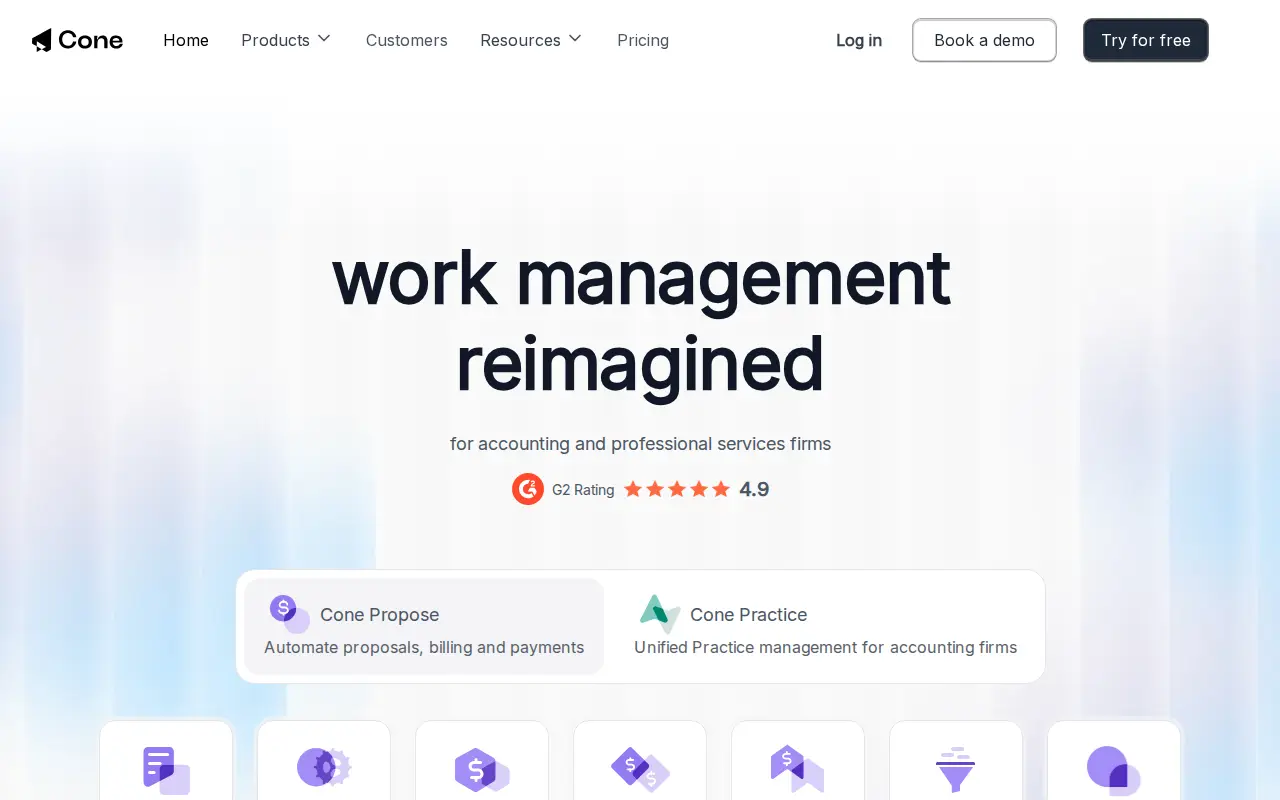
CO Cone
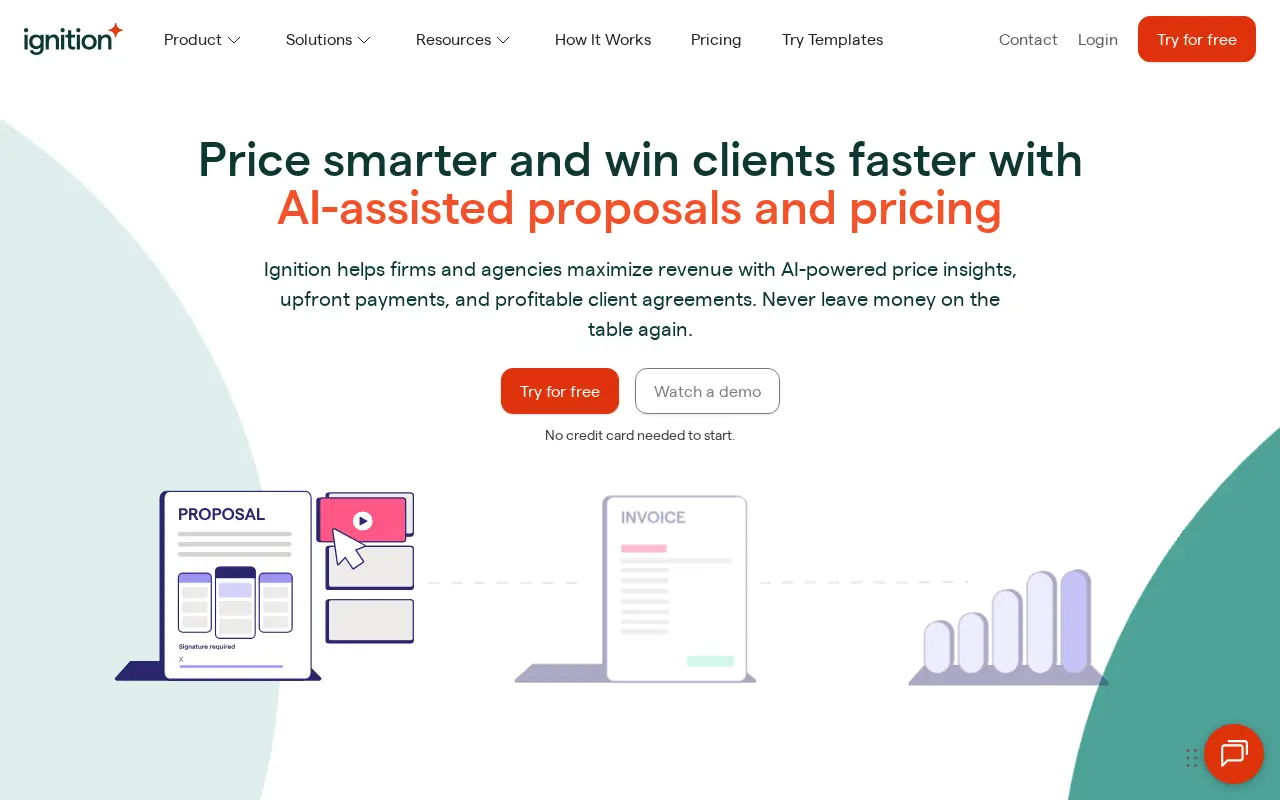
IG Ignition
Security: ISO 27001, SOC 2, and regional hosting
Put Cone and Ignition through the same three questions a security reviewer will ask: ISO 27001, SOC 2, and whether you can keep the tenancy in the US or the EU. Cells say Not listed when we could not find the claim on a public vendor page.
| Check | Cone | Ignition |
|---|---|---|
| ISO 27001 | Not listed | Not listed |
| SOC 2 | Not listed | SOC 2 Type 2 |
| US hosting | Not listed | Not listed |
| EU hosting | Not listed | Not listed |
Slack and Microsoft Teams
During a live questionnaire, SMEs get pinged in Slack or Teams, not in a vendor portal. Here is what Cone and Ignition publish for those two connections.
| Connection | Cone | Ignition |
|---|---|---|
| Slack | Not listed | Not listed |
| Microsoft Teams | Not listed | Not listed |
Subprocessors: the big three clouds, then the niche names
Compare Cone and Ignition on AWS, Azure and GCP first. Then scan for niche processors a reviewer should pause on: third-party LLMs, session replay, or support that leaves the region you elected.
| Layer | Cone | Ignition |
|---|---|---|
| AWS, Azure, GCP | Not listed | Not listed |
| Watch-outs | No niche processors flagged in our sourced list. | No niche processors flagged in our sourced list. |
Cone and Ignition both turn an accepted proposal into an engagement and then into money, and both are built first for accounting and bookkeeping firms. The practical split is the pricing unit. Cone charges per user, starting at $9 a month on annual billing. Ignition charges by plan, with each plan sized by active clients and users, starting at $39 a month for an eligible solo firm and $99 a month for everyone else. That one difference decides more purchases than any feature list.
One thing to settle before going further: neither product answers an RFP, a due diligence questionnaire, or a security questionnaire. They write outbound engagement proposals. If a 250-row vendor assessment just landed in your inbox, skip to the section near the end on the wrong-category problem.
Key takeaways
- Pricing unit: Cone Propose costs $9/user/mo billed annually ($13 monthly). Ignition’s Core plan costs $99/mo billed annually, and its plans scale with active clients rather than seats.
- Scope: Cone sells two products, Cone Propose for proposals and billing and Cone Practice for workflow, time tracking and a client portal. Ignition stays focused on proposals, engagement letters, billing and payments, and leans on Karbon, Financial Cents and FYI for practice management.
- Payments: Both collect money from the signed agreement. Ignition publishes its payout times by country and plan; on Core, US ACH payouts take 5 to 7 business days.
- Approvals: Ignition has internal proposal reviews and approvals, but only on Pro+ ($399/mo billed annually). Cone’s plans list no internal approval step before a proposal goes out.
- Ratings: Cone is rated 4.9/5 on G2 from 34 reviews; Ignition is rated 4.7/5 on Capterra from 152 reviews (both as of July 2026).
- Limitations: Cone charges extra for multiple signers and holds back automated payment collection for its Growth plan. Ignition’s approval workflow, faster ACH payouts and some add-ons sit on higher tiers, and unused subscription periods are not refunded.
What each tool is actually for
Cone is the younger product. It was founded in 2022 and is based in Hyderabad, India, with customers such as Beans Accounting, Drive Accountants and GreatWestCPAS. Its pitch is that a small firm can run the whole client lifecycle in one place. Cone Propose covers the front half: proposals, pricing tables, e-signature, invoicing and payments through Stripe or GoCardless. Cone Practice covers the back half: recurring workflows, time tracking, document management, client requests and a client portal. The higher Practice tiers include proposals too, so a firm can buy one Cone subscription and skip a separate practice-management tool.
Ignition has been at this since 2013 and is headquartered in Sydney. It raised a $50M Series C led by JMI Equity in November 2021, and its customer list includes Connected Accounting and GENFOCUS. Ignition’s job is narrower and deeper: get the engagement letter signed, then bill and collect against it automatically for as long as the engagement runs. It does not try to be your task manager. Instead it hands off to the practice tools many firms already use, with integrations for Karbon, Financial Cents and FYI alongside Xero, QuickBooks, MYOB and Gusto.
So the first question is structural. Do you want one vendor for proposals and practice management, or a best-of-breed proposal and billing layer that plugs into a practice tool you already like?
How the daily work differs
Building the proposal
Both tools are template-driven. In Cone you assemble a proposal from a flexible editor and a content library of saved services and fees, with pricing tables that the client can review before signing. Ignition builds proposals from a service library, and each service carries its own price and billing type: recurring, up-front, hourly or project-based, according to Ignition’s billing guide. That matters because the billing setup is the product. A monthly bookkeeping fee, a one-off tax return and an hourly advisory line can live in one agreement, and each bills on its own rhythm once the client signs.
Cone also offers optional pricing packages, but the “multiple pricing packages” feature is a paid add-on at $3/user/mo (or $25/user/yr). Ignition lets you put several options in front of the client inside one proposal, and the client picks one before accepting.
Signing
This is where the per-seat model shows a quirk. Cone’s pricing page lists “Multiple signers” as an add-on on every plan, at $2/user/mo or $17/user/yr. If your engagements routinely need two directors or two spouses to sign, budget for it.
Ignition counts signatures by plan instead. Ignition’s plan cards list one e-signature per proposal on Solo, two on Pro and ten on Pro+, with unlimited document signing on Enterprise.
Billing and collecting
Here Ignition is the more mature product. Signed work flows straight into automatic invoices and payment collection, and Ignition supports cards and direct debit across the US, Canada, the UK, Australia and New Zealand. It is also open about the timing. Its support article on clearing times, last updated in August 2026, lists US card payouts at 1 to 3 business days and US ACH at 5 to 7 business days on Core, with 2 to 3 days only on Pro and Pro+ for payments under $5,000.
Cone invoices from proposals or projects on its Essentials plan, but automated billing and payment collection, client reminders and the Zapier integration are features of Cone Propose Growth ($12/user/mo annually). On Essentials you are still sending invoices, just with more hand-holding.
Running the practice
This is Cone’s home turf, with one catch worth reading twice. The client portal and client requests are listed under Cone Practice Essentials and Growth. A firm buying only Cone Propose does not get them. If the portal is the reason you shortlisted Cone, price the Practice plan, which starts at $5/user/mo on Starter (no proposals) and $11/user/mo on Essentials, billed annually.
Ignition positions itself as the engagement and billing layer rather than the place where work gets tracked. Its integrations with Karbon, Financial Cents and FYI exist so a newly accepted client can flow into the practice tool where the work is actually managed.
Pricing and total cost
Both vendors publish prices, which is refreshingly rare. Here are the verified figures as of October 2026.
Cone. Cone Propose from $9/user/mo billed annually ($13/user/mo monthly), with a 14-day free trial and no credit card. Cone Practice starts at $5/user/mo billed annually on Starter, which excludes proposals. Propose Growth is $12/user/mo annually ($18 monthly). Practice Essentials is $11/user/mo and Practice Growth is $17/user/mo, both annual. Cone says annual billing saves 30%, and it asks teams above 20 people to contact sales.
Ignition. Plans are priced by active clients and users rather than per seat. The entry Solo plan is $39/mo on annual billing or $49 month to month, sold only in the US and Canada to firms that meet its eligibility rules. Core is $99/mo annually ($149 monthly), Pro is $229/mo ($279), Pro+ is $399/mo ($499) and Enterprise is custom. There is a 14-day free trial with no free plan, and during the trial a firm can collect up to $10,000 in payments with zero fees.
What does that mean for a real firm? Take a five-person practice that wants automated collection.
- On Cone Propose Growth, five users at $12/user/mo annually comes to $720 a year, plus the multiple-signers add-on if needed.
- On Ignition, seat count matters less than client count. Core at $99/mo annually is $1,188 a year, and Ignition’s pricing page sets an active-client allowance per plan. An “active client” is one who has accepted a proposal and still has a service within its contracted period, so a firm with a large recurring book can outgrow Core quickly.
Two cost lines are easy to miss. First, Ignition adds a per-client, per-month fee for any active clients above your plan’s limit, collected in arrears, and your plan does not downgrade automatically if client numbers fall. Second, Ignition charges payment transaction fees monthly on top of the subscription, plus an extra 0.3% on the portion of a direct debit above $3,000. Cone’s pricing page doesn’t publish a processing fee schedule of its own for Stripe or GoCardless, so check those rates with the processor directly.
The Solo plan deserves a warning label. Ignition restricts it to solo firms earning under $150,000 a year, with one user and 20 active clients, and requires you to connect Xero or QuickBooks Online and turn on payments when you sign up.
Integrations and stack fit
Cone’s list is built for a small firm’s back office: QuickBooks Online, Xero, Zoho Books, Stripe, GoCardless, Google Drive, OneDrive, SharePoint, Gmail, Outlook and Zapier, plus a Companies House integration and Xama AML checks for UK firms. Note that Zapier sits on Growth tiers.
Ignition’s list skews toward the practice-management ecosystem: Xero, QuickBooks Online, MYOB, Karbon, Gusto, Financial Cents, FYI, Slack and Zapier. Ignition also bakes AML and KYC compliance checks into its Core plan and above. If your firm already runs Karbon, Ignition slots in with less friction. If you run nothing yet and want one login, Cone is the tidier start.
Neither product connects to a CRM in the sales-team sense, and neither needs to. Their buyers are partners and practice managers, not account executives.
Trials, setup and switching
Both trials ask for no credit card, but they end differently. Cone gives 14 days on Propose and 30 days on Practice, and it advertises free migration support to move data across from your current system. Ignition gives 14 days with every listed feature unlocked, including payments. When an Ignition trial lapses, the account goes on hold: nothing is deleted and clients can still accept proposals you already sent, but those acceptances will not generate invoices or kick off workflows until you subscribe, and you have to create the missed invoices by hand. Ignition also says its team will help move clients who are already mid-engagement onto the platform.
The practical advice is the same for both. Do not trial with live client billing unless you intend to subscribe that week.
Known issues and watch-outs
Every item below links to its source. Vendor documents were checked in October 2026; review dates are given where reviews are the source.
Cone
- Multiple signers is a paid add-on on every plan, at $2/user/mo or $17/user/yr (Cone pricing, checked October 2026).
- Automated billing and payment collection, client reminders and Zapier need Cone Propose Growth; Essentials leaves them out (Cone pricing, October 2026).
- The client portal and client requests are listed under Cone Practice, so a proposals-only subscription does not include them (Cone pricing, October 2026).
- If you cancel an annual plan you keep access until the cycle ends, but Cone states the amount paid for the remaining period is not refunded (Cone pricing FAQ, October 2026).
- Cone’s review base is still small: 34 G2 reviews as of July 2026. A strong score from a small sample is encouraging, but it is a thinner signal than a few hundred reviews.
Ignition
- Internal proposal reviews and approvals before sending are a Pro+ feature at $399/mo billed annually (Ignition pricing, October 2026).
- US ACH payouts take 5 to 7 business days on Core and Solo; faster ACH applies only on Pro and Pro+ for payments under $5,000, and Ignition says payout times are not guaranteed (Ignition support, updated August 2026).
- Active-client overages are billed per client in arrears, plans do not downgrade on their own, and Ignition provides no refunds for unused monthly or annual periods (Ignition pricing FAQ, October 2026).
- Capterra reviews dated August 2023, April 2025 and August 2025 complain about how long client payments take to reach the firm’s bank account, and reviews from February 2025, August 2025 and January 2026 call the product expensive once extra features are added (Capterra reviews).
The wrong-category problem
Both products sometimes show up in searches for “proposal software” next to tools built to answer RFPs and questionnaires. They are a different species. Neither Cone nor Ignition can import a buyer’s Excel questionnaire, find answers in a knowledge library, or write responses back into the buyer’s file. There is no AI drafting from approved content and no question-level assignment to subject-matter experts.
That is completely fine for their buyers. An accounting firm sends engagement letters; it rarely answers a 300-question procurement RFP. If your firm does bid for public-sector or enterprise audit work and receives formal RFPs, run Cone or Ignition for engagements and look at a response platform such as Loopio, Responsive or AutoRFP.ai for the tenders. They do not overlap.
Pros and cons
Cone pros
- Low entry price at $9/user/mo annually, with unlimited clients and proposals on every Propose plan.
- One vendor can cover proposals, billing, workflows and a client portal.
- UK-specific extras such as Companies House lookups and Xama AML checks.
Cone cons
- Paid add-ons for multiple signers and multiple pricing packages.
- Automated collection and Zapier only on Growth.
- Young company with a small review base.
Ignition pros
- Mature proposal-to-payment engine where signed services bill themselves on their own schedules.
- Published payout times by country and plan, plus SOC 2 Type 2 and PCI DSS v4.0.1 SAQ A on its security record.
- Wide practice-management integrations, including Karbon, FYI and Financial Cents.
Ignition cons
- Approvals and fastest ACH payouts sit on upper tiers.
- Per-client overage fees and no refunds for unused periods.
- Reviewers repeatedly flag payout speed and total cost.
Who should pick Cone
- You run a small accounting or bookkeeping firm with a handful of staff and want proposals, billing and practice management from one vendor.
- Your client count is large relative to your headcount, so per-seat pricing works in your favour.
- You are UK-based and value Companies House and AML lookups built in.
- You are happy to start on a product with a short track record in exchange for a lower bill.
Who should pick Ignition
- Recurring billing is the heart of your firm, and you want each signed service to invoice and collect on its own schedule without anyone chasing it.
- You already run Karbon, FYI or Financial Cents and want the proposal layer to feed it.
- You need internal sign-off before proposals go out and can justify Pro+.
- You prefer a vendor with more than a decade of history and a larger review base.
Verdict
These two compete for the same desk, but they win on different dimensions. Cone wins on price per head and on breadth, giving a small firm one login for proposals, billing and the practice itself. Ignition wins on the money side: it is the deeper billing and collection engine, with clearer payout documentation and a mature integration network.
Pick Cone if you want an affordable all-in-one and can live with paying extra for multi-signer proposals. Pick Ignition if automated billing against engagements is the whole point and your client book justifies the plan it puts you on. Either way, run the free trial with three real engagement letters and one awkward client who needs two signatures. That afternoon will tell you more than any comparison table.
Read the full Cone review or Ignition review, or browse all RFP & DDQ software.
Frequently asked questions
What is the difference between Cone and Ignition?
Cone: Proposals and practice management for accountants. Ignition: Proposals plus billing for service firms. Cone is best for accounting and bookkeeping firms that want proposals and practice management together. Ignition is best for accounting and service firms that want proposals and billing joined up.
Which is cheaper, Cone or Ignition?
Cone starts lower at $9/user/mo, versus $39/mo for Ignition.
Is Cone or Ignition better for DDQs and security questionnaires?
They are level on DDQ and security-questionnaire handling in our capability model, so test both on one of your own questionnaires.
Do Cone and Ignition both handle RFPs?
Cone: limited. Ignition: limited.
Which should you choose, Cone or Ignition?
Cone is the pick for accounting and bookkeeping firms that want proposals and practice management together. Ignition is the pick for accounting and service firms that want proposals and billing joined up.
Are there alternatives to Cone and Ignition?
Yes. Browse the full directory of RFP, DDQ, and security-questionnaire platforms for more options and side-by-side comparisons.
Do Cone and Ignition list ISO 27001, SOC 2, and US or EU hosting?
Cone: ISO 27001 Not listed, SOC 2 Not listed, US Not listed, EU Not listed, Slack Not listed, Teams Not listed, clouds Not listed. Ignition: ISO 27001 Not listed, SOC 2 SOC 2 Type 2, US Not listed, EU Not listed, Slack Not listed, Teams Not listed, clouds Not listed. Confirm both on the vendor sites.
Source registry
Every page we read for these profiles, with the month it was last checked. Anything without a source is shown as not publicly disclosed. Spot an outdated fact? Send it from the corrections page.
Cone
Pricing
Security and compliance
- No security source URL recorded. Treat certifications and hosting as not publicly disclosed.
Product and integrations
Third-party reviews
Ignition
Pricing
Security and compliance
- No security source URL recorded. Treat certifications and hosting as not publicly disclosed.
Product and integrations
Third-party reviews