Quick verdict
Choose Proposable for sales teams that want a simple builder with solid recipient analytics; choose Proposify for sales and marketing teams that care about polished, on-brand proposals. Proposable starts lower, at $19/user/mo against $35/user/mo for Proposify. In our capability model Proposify leads on AI drafting, and the two match everywhere else.
Both profiles reviewed Oct 2026
2 of 70 profiles, one scoring modelNo paid placementSources checked: 12Choose Proposable or Proposify
PR Choose Proposable when
- Sales teams that want a simple builder with solid recipient analytics.
- Proposal analytics and SMS event notifications are on every plan, Solo included.
- You want the lower entry price: $19/user/mo.
PR Choose Proposify when
- Sales and marketing teams that care about polished, on-brand proposals.
- You need stronger AI drafting than Proposable offers.
Side-by-side comparison
| Capability | Proposable | Proposify | Edge |
|---|---|---|---|
| Best for | Sales teams that want a simple builder with solid recipient analytics. | Sales and marketing teams that care about polished, on-brand proposals. | - |
| Starting price | $19/user/mo | $35/user/mo | Proposable |
| Free tier | No | No | Match |
| RFPs | 0/3 | 0/3 | Match |
| DDQs | 0/3 | 0/3 | Match |
| Security questionnaires | 0/3 | 0/3 | Match |
| AI drafting | 0/3 | 1/3 | Proposify |
| Answer library | 1/3 | 1/3 | Match |
| Source attribution | 0/3 | 0/3 | Match |
| Workflow & approvals | 2/3 | 2/3 | Match |
| Integrations | 2/3 | 2/3 | Match |
| Self-serve onboarding | 3/3 | 3/3 | Match |
| ISO 27001 | Not listed | Not listed | - |
| SOC 2 | Not listed | SOC 2 Type II | - |
| US hosting | Not listed | Not listed | - |
| EU hosting | Not listed | Not listed | - |
| Slack | Not listed | Not listed | - |
| Microsoft Teams | Not listed | Not listed | - |
| AWS, Azure, GCP | Not listed | Not listed | - |
| Listed integrations | Salesforce, HubSpot | HubSpot, Salesforce, Pipedrive, Zapier, Stripe | - |
| Certifications | None listed | SOC 2 Type II | - |
What they look like
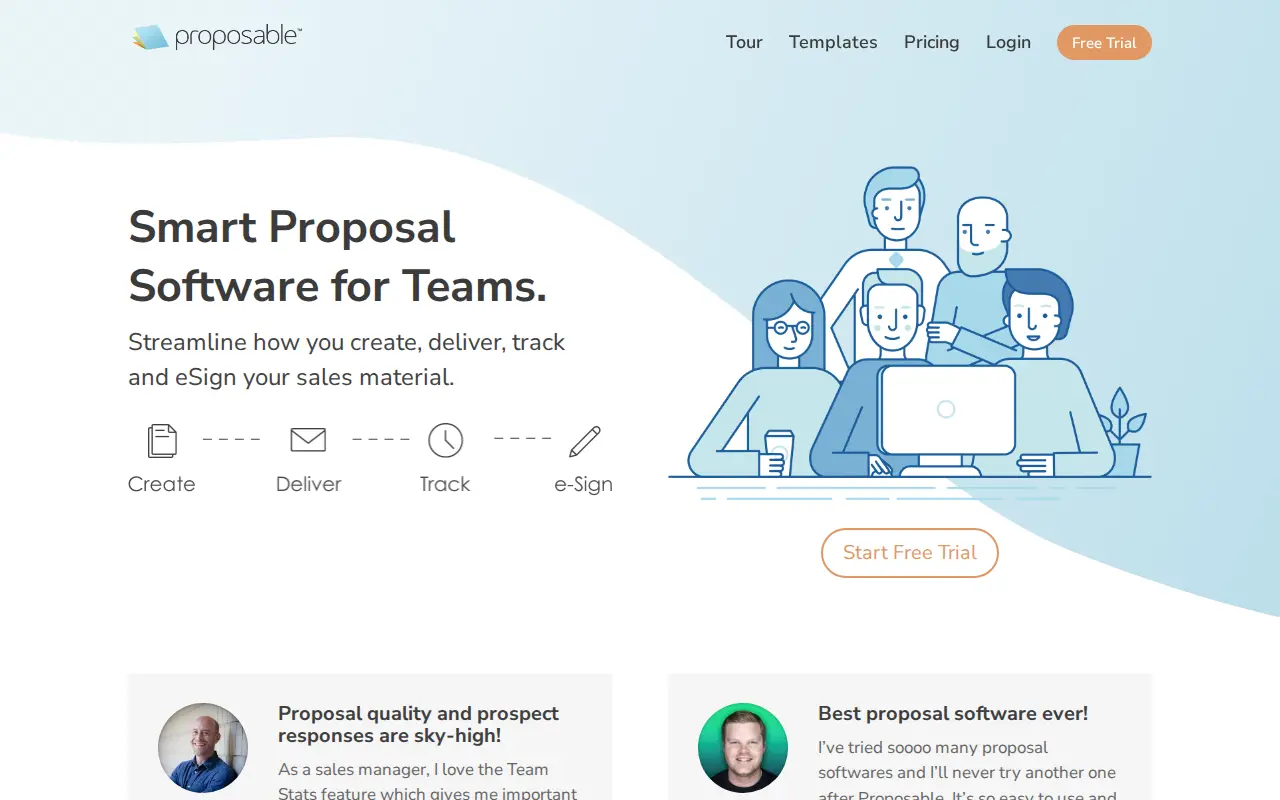
PR Proposable
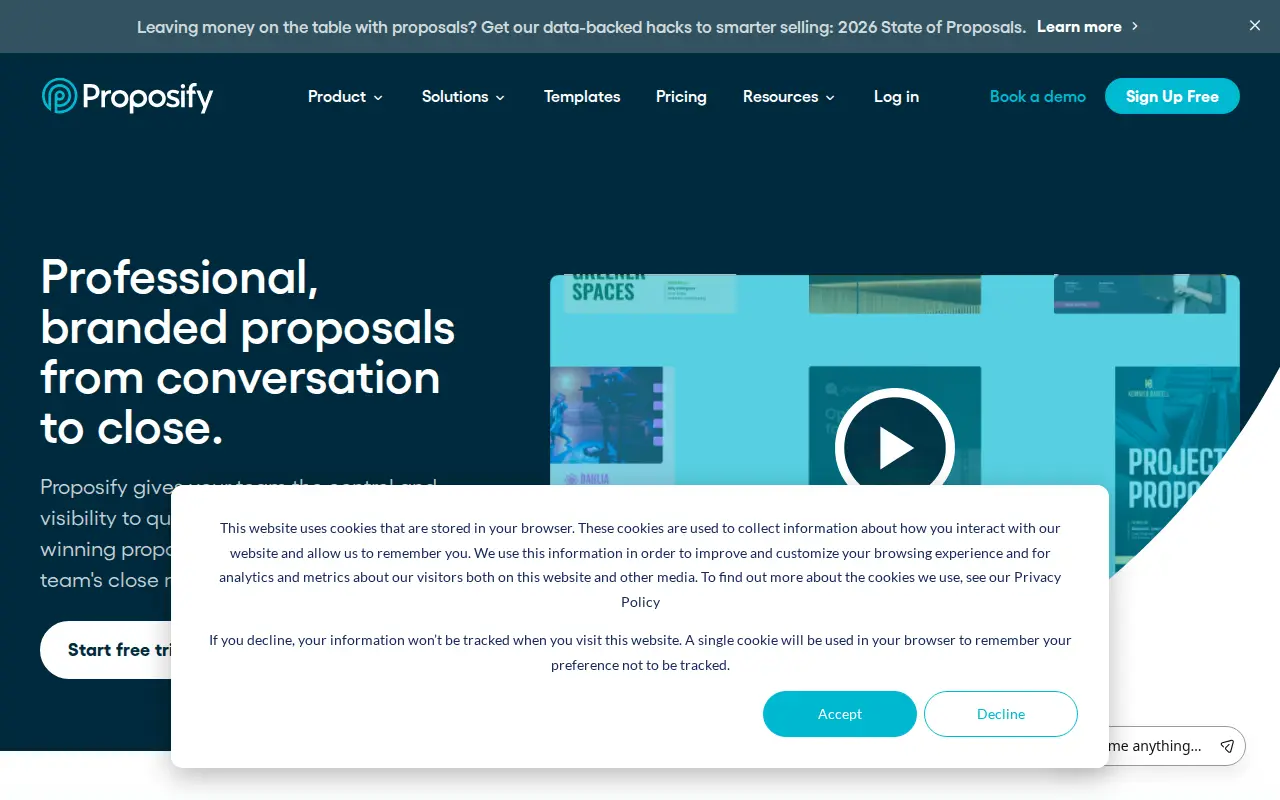
PR Proposify
Security: ISO 27001, SOC 2, and regional hosting
Put Proposable and Proposify through the same three questions a security reviewer will ask: ISO 27001, SOC 2, and whether you can keep the tenancy in the US or the EU. Cells say Not listed when we could not find the claim on a public vendor page.
| Check | Proposable | Proposify |
|---|---|---|
| ISO 27001 | Not listed | Not listed |
| SOC 2 | Not listed | SOC 2 Type II |
| US hosting | Not listed | Not listed |
| EU hosting | Not listed | Not listed |
Slack and Microsoft Teams
During a live questionnaire, SMEs get pinged in Slack or Teams, not in a vendor portal. Here is what Proposable and Proposify publish for those two connections.
| Connection | Proposable | Proposify |
|---|---|---|
| Slack | Not listed | Not listed |
| Microsoft Teams | Not listed | Not listed |
Subprocessors: the big three clouds, then the niche names
Compare Proposable and Proposify on AWS, Azure and GCP first. Then scan for niche processors a reviewer should pause on: third-party LLMs, session replay, or support that leaves the region you elected.
| Layer | Proposable | Proposify |
|---|---|---|
| AWS, Azure, GCP | Not listed | Not listed |
| Watch-outs | No niche processors flagged in our sourced list. | No niche processors flagged in our sourced list. |
Proposable and Proposify have similar names, similar feature lists and very different price ladders. Proposable is a per-user proposal builder with a cheap Team plan and a $500-a-month Enterprise floor. Proposify is a design-first proposal platform that, as of October 2026, sells a per-user Build plan and then jumps to annual team packages with seats bundled in.
Which one is right comes down to five questions: how much you send, whether you need approvals, whether you live in Salesforce, how much the brand team cares, and whether your buyers’ security teams will ask for a SOC 2 report. Work through them in order and the answer usually falls out by the third.
Both are outbound proposal tools. If your problem is incoming RFPs, DDQs or security questionnaires, see the section near the end before spending time on either.
Key takeaways
- Entry pricing: Proposable Solo is $19 per user per month with 5 proposal deliveries a month. Proposify’s pricing page lists Build at $35 per user per month billed annually ($49 monthly), with 10 sends a month included.
- Team pricing: Proposable Team is $39 per user per month with unlimited proposals. Proposify Grow is $325 a month billed annually ($3,900 a year), with 5 seats and 30 sends a month included, and $780 a year per extra seat.
- Approvals: Proposify adds approval workflows, roles and API access on Grow. Proposable adds Manager Approval and API access on Enterprise, from $500 a month.
- Salesforce: Proposify’s Salesforce managed package is included on Scale ($1,066 a month billed annually, 10 seats) or sold as a $9 per user per month add-on. Proposable’s Salesforce integration writes views, comments and acceptance back to the opportunity; mapping custom fields is an Enterprise feature.
- Security paperwork: Proposify says it is SOC 2 Type 2 certified and GDPR compliant. Proposable lists no certifications in our records.
- Limitations: Proposify meters sends on every plan, with per-send overage fees, and does not refund processed payments. Proposable deletes all data on cancellation and applies font changes to proposals already delivered.
Five questions that settle it
1. How many proposals do you send a month?
This is where the products differ most, and where Proposify’s 2026 pricing matters.
Proposify counts sends on every plan: 10 a month on Build, 30 on Grow and 75 on Scale, with overage fees of $0.50, $0.30 and $0.75 per extra send. Its FAQ says unused sends roll over and accumulate, and drafting, editing and collaborating never count. Only sharing with a client does.
Proposable counts deliveries only on Solo, at 5 a month. Team and Enterprise are unlimited.
A five-person team sending 60 proposals a month would be 30 over the Grow allowance, which at $0.30 a send is $9 a month. Small money. A ten-person team on Scale sending 200 a month would be 125 over, about $94 a month at $0.75. Not ruinous, but it makes Proposify’s real bill a function of volume in a way Proposable Team’s is not.
2. Do you need someone to approve before a proposal goes out?
If yes, Proposify is the cheaper route for a team of about five.
Proposify Grow ($3,900 a year with 5 seats) adds approval workflows that trigger on conditions you set: price total, discount percentage or line-item discount percentage. It also adds custom roles and permissions, where pages and individual page elements can be locked, plus custom fields and variables, account metrics and API access.
Proposable keeps Manager Approval for Enterprise, which starts at $500 a month and also brings departments, department stats, data export, custom integrations, API access, phone support and an account manager. For a team of 5 that is $6,000 a year or more, against Proposify Grow’s $3,900. For a team of 20, the comparison flips depending on what Proposable quotes above its $500 floor and how many $780 seats you add to Grow.
If no, Proposable Team at $39 per user is the simpler buy for most teams under ten.
3. Do you run your pipeline in Salesforce?
Both connect to Salesforce, in different ways and at different prices.
Proposable’s Salesforce integration syncs contacts and opportunities, can create an opportunity when a proposal is sent, writes views, opens, downloads, comments and acceptance back to the opportunity, and keeps the opportunity amount matched to the proposal’s estimate total. A “New Proposal” button can be added to the opportunity page. Mapping Salesforce fields into templates as merge tags is an Enterprise feature. Its pricing page lists standard CRM integrations on Team and all CRM integrations on Enterprise, so confirm during the trial which tier your Salesforce setup needs.
Proposify treats Salesforce as a premium integration. Its pricing page describes a managed package, optionally with SSO, so reps work inside Salesforce. It is included on Scale and costs $9 per user per month as an add-on otherwise. Build and above include integrations with popular CRMs and Zapier; our records list HubSpot, Pipedrive and Zoho among them, plus Stripe, Xero, QuickBooks and Gong.
In practice, a Salesforce-first team pays more on Proposify unless it is already buying Scale, and gets the deeper write-back on Proposable only if its Salesforce setup falls under the plan it can afford. Ask each vendor for a reference customer on your Salesforce edition.
4. How much does the brand team care?
Proposify is the design-led option, and that is its clearest strength. Its editor is drag and drop for text, images, video, tables and shapes. Templates are unlimited on every plan, a custom domain keeps “proposify” out of the URL, and its in-house designers will build an on-brand template for $1,500. On Grow and above, roles can lock whole pages or individual elements, so a rep changes the price and the client name while the layout and legal text stay fixed.
Proposable is more constrained. Its design settings are global: an account owner picks fonts from Google Fonts for headers and body, and the choice applies to every proposal in the account. Its help center notes that a change also restyles proposals already delivered (read October 2026). That enforces consistency, with less room for a designer to shape individual documents.
If marketing owns the proposal template and wants pixel control, Proposify. If sales ops owns it and wants every rep to send the same thing with minimal fuss, either works, and Proposable costs less.
5. Will a buyer’s security team review the vendor?
Sometimes a proposal tool ends up on the buyer’s vendor list, because it handles their contact data and signed agreements. Proposify says it is SOC 2 Type 2 certified, audited against the Security, Availability and Confidentiality criteria, hosted on Amazon, and GDPR compliant; payments run through Stripe. Our records list no certifications for Proposable. The security panel on this page carries the detail. If your own security team requires a SOC 2 report from every SaaS vendor, Proposify clears that bar with less back and forth.
Proposify’s October 2026 price list, explained
Proposify’s pricing page as of October 2026 lists four options:
- Build: $35 per user per month billed annually ($420 a year), $49 monthly or $147 per quarter. Includes unlimited documents and signatures, the content library, AI writing, an MCP server, document insights, integrations and automations, a product catalog and one collaborator seat. 14-day trial with no card.
- Grow: $325 a month billed annually, which is $3,900 a year including 5 seats, with additional seats at $780 a year. Adds roles and permissions, approval workflows, account metrics, custom fields and API access, and 3 collaborator seats. Sold through a demo. An optional $2,000 Launch Kit covers onboarding, template design and 30 days of priority support.
- Scale: $1,066 a month billed annually, about $12,800 a year including 10 seats, with additional seats at $780 a year. Adds the Salesforce premium integration, SSO with Okta or Azure, multiple workspaces for franchise-style businesses, custom reporting, premium onboarding and a dedicated success manager.
- Enterprise: custom pricing for high-volume accounts.
The page still uses the older Basic, Team and Business names in its send-limit table and comparison grid, which can make it confusing to read. Its FAQ also says Proposify does not offer refunds once a payment has been processed, and that the trial gives access to Team-plan features for 14 days.
Collaborators are a useful detail: they can edit or approve specific proposals but cannot create or send, so a finance reviewer does not need a full seat.
Proposable’s plans, explained
Proposable’s pricing page lists three plans, each with a free trial:
- Solo: $19 per user per month, 5 proposal deliveries a month, limited integrations, no Stripe payments and no team collaboration.
- Team: $39 per user per month, unlimited proposals, standard CRM integrations, Stripe payments, team collaboration, a custom proposal URL and sales team stats.
- Enterprise: from $500 a month, adding all CRM integrations, departments, Manager Approval, data export, custom integrations, API access, acceptance redirects, template assistance, an account manager and team training.
Every plan includes e-signatures, the content library, proposal analytics and SMS event notifications. Proposable also lets you edit a delivered proposal with the changes visible to the buyer at the same link.
Proposable was founded in 2009 and is based in Bloomington, Indiana. Proposify was founded in 2012 in Halifax, Nova Scotia, and raised $13 million in September 2021 from Innovacorp and the Canadian Business Growth Fund. On reviews, as of July 2026, Proposify holds 4.6 out of 5 on G2 across 1,138 reviews and 4.4 on Capterra across 299; Proposable holds 4.2 on G2 across 74 and 4.4 on Capterra across 112.
Support, onboarding and language
Proposify lists email and chat support Monday to Thursday, 8 AM to 8 PM Eastern, and Fridays until 4 PM, with phone and Zoom help available. Grow buyers can add the $2,000 Launch Kit; Scale includes premium onboarding with one-to-one training and a dedicated success manager. If you sell outside English, note that Proposify can translate its interface into 15 languages but, by its own FAQ, does not translate proposal content or the emails it sends, so those stay your job.
Proposable lists email and chat support on Solo and Team, and adds phone support, template assistance, team training and an account manager on Enterprise. For a small team that means self-service setup with chat help; for an Enterprise buyer, a named contact.
AI and automation
Proposify includes AI writing on Build and above, used through an embedded widget to prompt, write, refine and fix text, and it says its MCP server lets you connect Proposify to Claude to create and update documents. It also has a workflow automation builder for Zapier-style rules between Proposify and other tools. Those are drafting aids for your own proposals.
Proposable does not advertise generative AI drafting; content comes from templates and its block library. SMS notifications and CRM write-back are its automation story.
Known issues and watch-outs
What follows comes from the two vendors’ own documentation plus complaints that repeat across dated Capterra reviews. Each line names its source.
Proposable
- Five deliveries is the monthly ceiling on Solo, which also lacks Stripe and collaboration. Source: Proposable pricing, October 2026.
- Manager Approval, the API and data export only come with Enterprise, priced from $500 monthly. Source: Proposable pricing, October 2026.
- Closing the account wipes every proposal, finished or still open. Source: Proposable help center, October 2026.
- Fonts are an account-level setting that reaches back into proposals buyers already have. Source: Proposable help center, October 2026.
Proposify
- A send allowance applies at every tier, and going over costs a fee per send. Source: Proposify pricing, October 2026.
- Approval rules, roles and the API begin at Grow, an annual package with five seats; the Salesforce managed package means Scale or a paid add-on. Source: Proposify pricing, October 2026.
- Payments already processed are not refunded, per the FAQ. Source: Proposify pricing, October 2026.
- Reviewers between September 2024 and April 2026 describe clunky editing, messy formatting when Word text is pasted in, cache problems that need a refresh, and prices that feel steep for small teams. Source: Capterra reviews, October 2026.
Concessions: Proposify’s locked templates and section-level analytics are the most complete brand-control package in this pair, and its review base is far larger. Proposable’s unlimited Team plan at $39 is the simpler, cheaper path for a sales team that just needs to send and track.
Neither is a questionnaire tool
Proposable and Proposify both help you write and send your own proposal. They do not import a buyer’s RFP template, parse a security questionnaire spreadsheet, or maintain a library of approved answers with owners and review dates. Their content libraries store sections, images and snippets for outbound documents.
If your team is the one filling in SIG Lite workbooks, vendor risk assessments or DDQs, that is a different software category. Response platforms such as Loopio, Responsive and AutoRFP.ai exist for it, and many companies run one alongside a proposal tool like these two.
Who should pick Proposable
- A sales team of up to about ten that wants unlimited sending for a predictable $39 per seat.
- Salesforce users who want proposal activity written back to the opportunity.
- Sellers who negotiate live and want to update a delivered proposal at the same link.
- Teams that do not need approvals, or that can justify the $500-a-month Enterprise floor when they do.
Who should pick Proposify
- Marketing-led teams that want locked, designed templates and section-level reading analytics.
- Teams of around five that need approval rules on discount and deal size, where Grow undercuts Proposable Enterprise.
- Franchise or multi-location businesses that need separate workspaces under one parent (Scale).
- Buyers whose own security policy requires a SOC 2 report from the vendor.
Verdict
These tools overlap on paper and diverge on price structure. Proposable is the better value for a small sales team that sends a lot, needs CRM write-back, and does not need approvals. Proposify is the better product for design control, approval rules and buyer analytics, and its Grow package makes approvals cheaper than Proposable’s Enterprise for a five-seat team.
Before you sign either, confirm the current numbers on the vendor’s own pricing page, since Proposify’s price list in particular has changed shape, and test how your real proposals look in each editor.
Read the full Proposable review or Proposify review, or browse all RFP & DDQ software.
Frequently asked questions
What is the difference between Proposable and Proposify?
Proposable: Proposals with a focus on tracking. Proposify: Design-led sales proposals with approvals. Proposable is best for sales teams that want a simple builder with solid recipient analytics. Proposify is best for sales and marketing teams that care about polished, on-brand proposals.
Which is cheaper, Proposable or Proposify?
Proposable starts lower at $19/user/mo, versus $35/user/mo for Proposify.
Is Proposable or Proposify better for DDQs and security questionnaires?
They are level on DDQ and security-questionnaire handling in our capability model, so test both on one of your own questionnaires.
Do Proposable and Proposify both handle RFPs?
Proposable: limited. Proposify: limited.
Which should you choose, Proposable or Proposify?
Proposable is the pick for sales teams that want a simple builder with solid recipient analytics. Proposify is the pick for sales and marketing teams that care about polished, on-brand proposals.
Are there alternatives to Proposable and Proposify?
Yes. Browse the full directory of RFP, DDQ, and security-questionnaire platforms for more options and side-by-side comparisons.
Do Proposable and Proposify list ISO 27001, SOC 2, and US or EU hosting?
Proposable: ISO 27001 Not listed, SOC 2 Not listed, US Not listed, EU Not listed, Slack Not listed, Teams Not listed, clouds Not listed. Proposify: ISO 27001 Not listed, SOC 2 SOC 2 Type II, US Not listed, EU Not listed, Slack Not listed, Teams Not listed, clouds Not listed. Confirm both on the vendor sites.
Source registry
Every page we read for these profiles, with the month it was last checked. Anything without a source is shown as not publicly disclosed. Spot an outdated fact? Send it from the corrections page.
Proposable
Pricing
Security and compliance
- No security source URL recorded. Treat certifications and hosting as not publicly disclosed.
Product and integrations
Third-party reviews
Proposify
Pricing
Security and compliance
- No security source URL recorded. Treat certifications and hosting as not publicly disclosed.
Product and integrations